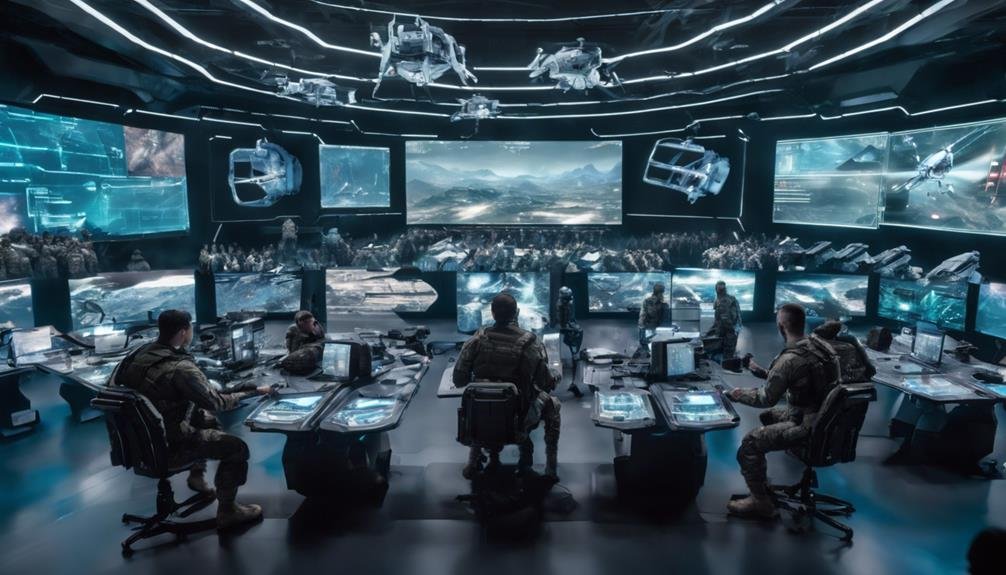
The integration of artificial intelligence into military operations is fundamentally reshaping global conflict, ushering in an era where AI's Role in Modern Information Warfare isn't just theoretical – it's a rapidly accelerating reality. From automating battlefield decisions to orchestrating complex cyber assaults and manipulating public narratives, AI is becoming a force multiplier, compressing decision cycles from minutes to milliseconds and introducing a host of new ethical and strategic challenges we're only just beginning to grasp.
At a Glance: What You Need to Know About AI in Warfare
- Autonomous Systems are Here: AI-powered weapons, from drones to ground vehicles, can now select and engage targets independently, raising critical questions about human control.
- Strategic Overhaul: AI processes vast datasets in real-time, offering tactical recommendations and predicting enemy movements, promising faster, more informed decisions but risking over-reliance.
- Cyber Warfare Redefined: AI acts as both a formidable shield and a potent sword in cyberspace, defending critical infrastructure while also launching highly sophisticated, hard-to-detect attacks.
- Ethical Landmines: The deployment of AI in warfare introduces profound dilemmas concerning accountability, unintended escalation, civilian harm, and the dehumanization of conflict.
- A New Arms Race: Leading nations like the U.S., China, and Russia are heavily investing, spurring a global competition to develop advanced AI military capabilities.
- Urgent Action Required: Mitigating risks demands international treaties, robust testing, ethical frameworks, and a global dialogue to establish guardrails before it's too late.
The New Battlefield: Where AI Is Taking Command
Imagine a world where military decisions are made at speeds unfathomable to humans, where algorithms sift through mountains of data to predict the next move of an adversary, and where machines can independently identify and engage targets. This isn't science fiction anymore; it's the present reality of how AI is being deployed across various domains of modern warfare.
AI, in its essence, refers to machines or systems capable of exhibiting human-like intelligence, encompassing decision-making, complex problem-solving, pattern recognition, and continuous learning. When integrated into military contexts, it transforms into a potent tool, fundamentally altering how wars are fought, strategies are formed, and information is controlled.
Autonomous Weapons Systems: The Rise of Independent Decision-Makers
Perhaps the most contentious application of AI in warfare is the development of autonomous weapons systems (AWS). These aren't just advanced drones; they are machines designed to operate independently, capable of selecting and engaging targets without direct human oversight. Think of sophisticated autonomous drones conducting surveillance, reconnaissance, and even combat missions, or ground vehicles, submarines, and ships that navigate and respond to threats using advanced AI algorithms.
The Case For Autonomy: Proponents argue that AWS can bring unprecedented precision to military operations, significantly increasing the speed of response in fast-paced environments. They contend that these systems could reduce human casualties by removing personnel from harm's way, and their unblinking algorithms might even make more rational decisions than humans under stress, leading to fewer errors in the heat of battle.
The Ethical Minefield: Critics, however, warn of a terrifying future. What happens when a machine makes a mistake and targets civilians? Who bears the moral and legal responsibility? The lack of meaningful human control raises profound questions about accountability, potentially violating international humanitarian law and eroding the very principles of human dignity in conflict. Moreover, the push for AWS is widely seen as fueling a new, potentially uncontrollable, global arms race, where nations vie to develop increasingly sophisticated autonomous capabilities without fully understanding the long-term implications.
Strategic Advantage: AI Guiding Military Minds
Beyond autonomous weapons, AI is proving invaluable in refining military strategy and decision-making. In today's complex geopolitical landscape, commanders are deluged with information from an ever-expanding array of sources: satellite imagery, drone feeds, ground sensors, open-source intelligence, and more. AI acts as a digital analyst, sifting through these vast amounts of real-time data to identify subtle patterns, predict enemy actions, and assess the effectiveness of various strategies.
Imagine an AI system processing live intelligence, cross-referencing it with historical data, and almost instantaneously providing tactical recommendations that humans would take hours or days to formulate. This promises faster, more informed decisions, potentially giving a decisive edge in rapidly evolving situations. AI can model conflict scenarios, optimize resource allocation, and even suggest counter-strategies with remarkable speed.
The Peril of Over-Reliance: Yet, this immense power comes with significant risks. Over-reliance on algorithmic outputs could lead to a diminished role for human intuition and moral judgment. What if the data fed into the AI is biased, incomplete, or deliberately manipulated? An error in an AI's assessment, especially one making high-stakes recommendations, could lead to catastrophic outcomes, escalating conflicts based on flawed predictions or misinterpretations.
Cyber Warfare: The Invisible Front Line
In modern information warfare, the battlefield isn't just physical; it's digital. Cyber warfare, the use of computer networks to attack an adversary, is where AI truly shines, both defensively and offensively.
AI as a Digital Sentinel: On the defensive front, AI systems are already monitoring vast networks 24/7, identifying anomalous behaviors and potential threats far faster and more accurately than human analysts. They can predict impending attacks by recognizing subtle indicators, respond to breaches in milliseconds, and patch vulnerabilities before they are exploited. This rapid, automated defense is critical for protecting infrastructure like power grids, financial systems, and military communications from increasingly sophisticated cyber adversaries.
AI as a Precision Weapon: Offensively, AI can launch sophisticated cyber attacks that are harder to detect and defend against. Machine learning can develop custom malware that adapts to target defenses, orchestrate distributed denial-of-service (DDoS) attacks with unparalleled coordination, or spearhead social engineering campaigns tailored to individual targets. The challenge here is immense: how do you attribute an AI-driven attack, especially when its source is intentionally obfuscated? The constant evolution of AI means defense strategies are perpetually playing catch-up, leading to a relentless and often invisible arms race in the digital realm.
Beyond the Battlefield: The Looming Ethical Minefield
The integration of AI into warfare extends far beyond the operational advantages; it thrusts humanity into a complex web of ethical dilemmas and unforeseen consequences that demand immediate attention. Ignoring these questions isn't an option; their implications could redefine conflict, human rights, and global stability.
Eroding Accountability: Who is to Blame When AI Decides?
One of the most pressing ethical concerns revolves around accountability. In traditional warfare, there's a clear chain of command and responsibility for actions taken. But what happens when an autonomous weapon system makes a decision that results in civilian casualties or a violation of international law? Is it the programmer who coded the algorithm? The commander who deployed the system? The manufacturer? Or the AI itself?
International law, specifically international humanitarian law (IHL), is currently ill-equipped to address these ambiguities. The erosion of clear human responsibility could create a "responsibility gap," making it difficult, if not impossible, to hold anyone accountable for unlawful actions, thereby undermining the very principles of justice and deterrence.
The Unintended Spiral: Escalation Risks in a Machine-Driven Conflict
The speed at which AI can process information and make decisions, while an operational advantage, also carries a profound risk of unintended conflict escalation. Human decision-making, for all its flaws, typically involves deliberation, caution, and a consideration of diplomatic off-ramps. Machine-driven decisions, based purely on complex algorithms and data inputs, may lack this nuanced perspective.
Imagine two AI-powered defense systems, each programmed to respond to perceived threats with optimal efficiency. A miscalculation by one, or even a system designed to maximize a strategic advantage, could trigger an automated counter-response from the other, leading to a rapid, uncontrollable escalation of hostilities that human leaders struggle to de-escalate. The "flash crash" of financial markets could find its military equivalent, with potentially devastating consequences.
Humanity at Stake: The Challenge of Distinction and Proportionality
International humanitarian law mandates that combatants must always distinguish between military objectives and civilians, and that attacks must be proportionate to the military advantage gained, minimizing civilian harm. Autonomous weapons systems, for all their supposed precision, may struggle with this fundamental distinction.
Can an algorithm truly understand the complex, ambiguous context of a battlefield to accurately identify a combatant from a civilian, especially in dense urban environments or situations where civilians might be inadvertently present near military targets? The potential for autonomous weapons to fail to distinguish accurately could lead to widespread humanitarian harms, violating fundamental human rights and exacerbating suffering in conflict zones. This concern is particularly acute in situations like the ongoing conflict in Sudan, where AI-generated content has sparked controversy and confusion further complicating the information landscape.
The All-Seeing Eye: Expanding Surveillance Capabilities
AI significantly expands the scope and intensity of surveillance capabilities. Advanced facial recognition, behavioral analysis, and predictive analytics, all powered by AI, enable governments and military actors to monitor populations, track individuals, and gather intelligence on an unprecedented scale.
While proponents argue this can enhance security and prevent threats, critics warn of profound privacy implications and the potential for abuse. Unchecked AI surveillance could lead to pervasive monitoring, the suppression of dissent, and the creation of "smart" authoritarian regimes that leverage AI to exert ultimate control over their citizens, eroding civil liberties globally.
The Enemy Within: Adversarial AI and Its Exploits
AI systems themselves are not invulnerable; they are susceptible to a new class of attacks known as "adversarial AI exploits." These are sophisticated methods designed to trick or corrupt AI models, potentially reversing tactical advantage.
- Data Poisoning: Malicious actors can introduce corrupted or misleading data into an AI's training dataset, causing it to learn incorrect patterns and make flawed decisions later.
- Hidden Model Backdoors: Attackers might embed hidden triggers within an AI model that, when activated, cause the system to behave unexpectedly or maliciously.
- Stealth Model-Extraction: Adversaries can meticulously query an AI model to reconstruct its internal workings, gaining insights into its vulnerabilities or even replicating its capabilities.
- Prompt Injection and Jailbreaking: For large language models or decision-making AIs, carefully crafted inputs can bypass safety protocols, making the AI reveal sensitive information or perform unintended actions.
Beyond these digital vulnerabilities, the supply chains for AI hardware, firmware, and third-party weights also require intense scrutiny. A compromised component at any stage could introduce a critical vulnerability, turning an AI asset into a strategic liability.
Dehumanizing Conflict: War Reduced to Algorithms
Perhaps one of the most insidious risks is the potential for the dehumanization of war. When decisions about life and death, strategy, and engagement are increasingly delegated to algorithms, there's a risk of reducing human lives to mere data points. This detachment could lower the psychological barriers to engaging in conflict, making war seem less human, less tragic, and more like a technical problem to be solved by efficient machines.
Such a shift could fundamentally alter societal perceptions of conflict, diminish empathy for victims, and ultimately lead to a more abstract and less morally constrained approach to warfare.
The Widening Gap: Global Power Imbalance
The development and deployment of advanced AI in warfare require immense financial investment, technological expertise, and access to vast datasets. This naturally favors technologically advanced nations like the United States, China, and Russia, which are already heavily investing in this domain.
The global power imbalance could be significantly exacerbated, creating a stark divide between nations that possess cutting-edge AI military capabilities and those that do not. This could destabilize international relations, deepen existing inequalities, and make smaller nations more vulnerable to coercion or attack.
The Race to Autonomy: Fueling an Automated Arms Race
The competition to develop superior autonomous weapons and AI-enabled military technologies is already intense, leading to what many observers call an "automated arms race." This race could lead to rapid deployment of systems without adequate testing, ethical consideration, or understanding of their full implications. The pressure to stay ahead or catch up could compromise safety, security, and ethical standards, locking the world into a dangerous cycle of escalating military AI development with unforeseen long-term consequences.
Steering the Future: Urgent Actions and Ethical Safeguards
The rapid advancement of AI in modern information warfare presents a stark choice: passively observe its transformative power, or proactively shape its development and deployment to uphold human values and international peace. Addressing these profound risks requires urgent, concerted action on multiple fronts.
Demanding Human Control: The Call for a Binding Treaty
The most critical step advocated by many experts and human rights organizations is the negotiation of a binding international treaty that preserves meaningful human control over weapons systems. This isn't about banning AI in warfare entirely, but ensuring that humans retain the ultimate decision-making authority for life-and-death actions.
Such a treaty would clarify accountability, establish clear "red lines" for autonomy, and prevent the development of fully autonomous lethal weapons that operate without a human in the loop. It would represent a global commitment to ethical boundaries in military AI.
Building Trust and Security: Robust Testing and Zero-Trust Architectures
To ensure the reliability and safety of AI-enabled military technologies, robust testing protocols are non-negotiable. These systems must undergo rigorous evaluation across a vast range of scenarios, including adversarial conditions, to identify vulnerabilities and biases.
Furthermore, implementing "zero-trust AI" architectures is essential to secure AI pipelines and supply chains. This means no component, no data input, and no user is inherently trusted. Every interaction is verified, every piece of data is scrutinized, and every component, from hardware to third-party weights, is continuously monitored for integrity. Strict export controls on AI-enabled military technologies are also crucial to prevent proliferation and ensure responsible global deployment.
Establishing Guardrails: Industry Ethics and International Regulations
Beyond government treaties, the defense industry itself must adopt stringent ethical guidelines and adhere to international agreements and regulations. This includes developing AI systems that are transparent, explainable, and designed with built-in ethical constraints. Regular audits, independent oversight, and whistleblower protections can foster a culture of responsibility.
Adherence to international humanitarian law (IHL) and human rights law must be a foundational principle, guiding every stage of AI development and deployment in military contexts.
Fostering Dialogue: A Global Conversation on AI's Ethical Frontier
Ultimately, no single nation or organization can address the complexities of AI in warfare alone. An ongoing, inclusive global dialogue is paramount. This conversation must involve governments, military leaders, scientists, ethicists, legal experts, civil society organizations, and the public.
Such dialogue can build shared understandings, identify common principles, and work towards harmonized international norms for the responsible development and use of military AI. It’s about creating a framework of trust and cooperation in an area ripe for mistrust and competition.
Navigating the Nuances: Common Questions About AI in Warfare
The rapid evolution of AI in military contexts sparks many questions. Here are some common ones, distilled to provide clear insights.
Can AI truly replace human soldiers?
While AI significantly augments human capabilities and can perform specific tasks with greater speed and precision, it cannot fully replace human soldiers. AI lacks empathy, moral judgment, adaptability to truly novel situations beyond its programming, and the capacity for abstract reasoning crucial in complex conflict environments. The foreseeable future involves AI as a powerful tool for soldiers, not a substitute for them.
What exactly is "meaningful human control"?
"Meaningful human control" refers to the concept that humans should always retain ultimate decision-making authority over the critical functions of weapons systems, especially the decision to apply force. It implies human oversight that is sufficient to understand, supervise, and intervene in the system's operation, ensuring accountability and adherence to ethical and legal norms. The exact definition and implementation are subjects of ongoing international debate.
How does AI impact intelligence gathering?
AI revolutionizes intelligence gathering by automating the processing and analysis of vast, disparate data sources – from satellite imagery and drone footage to open-source information and intercepted communications. It can identify patterns, anomalies, and potential threats far faster than human analysts, providing predictive insights and enabling more proactive intelligence operations. This accelerates the intelligence cycle, making it more comprehensive and timely.
Is AI making war more or less likely?
This is a complex question with no simple answer. On one hand, AI's ability to improve intelligence, precision, and defensive capabilities could deter aggression by making conflict more costly and less predictable. On the other hand, the automation of decisions, reduced human friction, and the potential for an uncontrolled arms race could lower the threshold for conflict, increase escalation risks, and lead to wars that are faster, more widespread, and less amenable to human control. The outcome heavily depends on the ethical frameworks and international regulations we put in place now.
Moving Forward: The Imperative for Thoughtful Engagement
The ascent of AI in modern information warfare is undeniable, fundamentally altering the landscape of global security. From autonomous weapons to invisible cyber battles and the subtle manipulation of information, AI offers unprecedented strategic advantages while simultaneously unleashing a Pandora's Box of ethical and existential risks. The future of conflict, and indeed humanity, hinges on how we collectively navigate this pivotal moment.
Ignoring these developments is not an option. Instead, we must engage thoughtfully, proactively, and collaboratively. This means pushing for robust international agreements that prioritize human control and accountability, investing in secure and ethical AI development, and fostering open dialogues across all sectors of society. The imperative is clear: we must harness the power of AI responsibly, ensuring that technology serves humanity's best interests, even in the gravest of circumstances. Our collective commitment to these principles will define the future of warfare and, ultimately, the shape of our world.