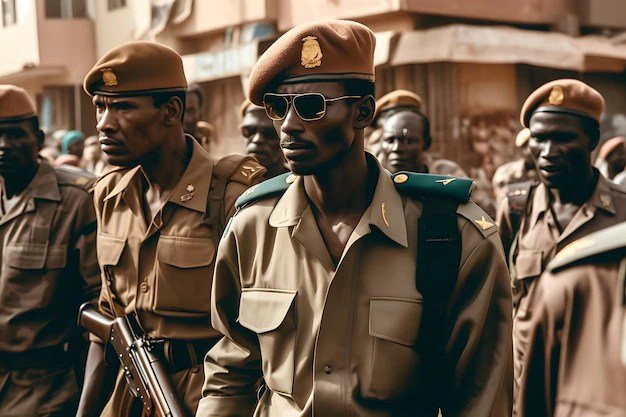
The humanitarian crisis unfolding in Sudan is harrowing, a brutal conflict marked by immense suffering, displacement, and a desperate struggle for survival. Yet, a new, insidious layer of complexity has emerged, one that threatens to undermine both aid efforts and the very possibility of peace: the weaponization of AI-generated content. This Case Study: AI-Generated Content & The Sudan Conflict isn't just about images; it's a stark illustration of how advanced technology, initially heralded for its potential, is now fueling a profound misinformation crisis, distorting narratives, and eroding crucial trust when it's needed most.
At a Glance: AI in the Sudan Conflict
- A Dual-Edged Sword: Artificial intelligence plays a paradoxical role – it’s a source of widespread misinformation and a powerful tool for peacemaking and understanding.
- Misinformation's Velocity: Faked AI images and miscontextualized old photos spread virally across social media, often outpacing traditional media's ability to fact-check.
- Eroding Trust: The rapid spread of false content risks diminishing public and stakeholder trust in legitimate conflict reporting, complicating international scrutiny and humanitarian aid.
- Humanitarian Toll: This digital chaos unfolds against a backdrop of severe real-world suffering: famine, displacement, and attacks on civilians.
- AI for Peace: Despite the challenges, AI-powered tools are being effectively used to gather insights from conflict-affected populations, fostering inclusive dialogue and informing peace processes, even in hard-to-reach areas.
- A Call for Vigilance: Navigating this landscape requires critical media literacy, robust verification, and a collective effort to distinguish truth from fabrication.
The Smoke & Mirrors: How Faked AI Images Warp Reality
For too long, the devastating conflict in Sudan remained largely out of the global spotlight, an ignored tragedy overshadowed by other crises. But as the Rapid Support Forces (RSF) advanced on key locations like El-Fasher, a torrent of social media images suddenly went viral, drawing overdue attention. The problem? A significant portion of these images were not what they seemed.
Many were expertly crafted using artificial intelligence, presenting scenes of manufactured devastation designed to provoke strong emotional responses. Others were old photos, often from entirely different conflicts or even countries, cynically re-shared and mislabeled to fit a new narrative. The impact was immediate and profound, triggering a heated debate among journalists, policymakers, and the public about the terrifying new reporting challenges we face in the digital age.
Social media, with its inherent "tinderbox environment," acts as an accelerant. Echo chambers amplify content, while vested interests, both internal and external, strategically deploy fake or misinterpreted images. This content travels at lightning speed, far faster than any traditional newsroom or fact-checking organization can hope to verify. By the time dedicated teams from the BBC, AFP, or Deutsche Welle successfully debunk these fabrications, the damage is often done; the false images have already shaped public opinion, influenced narratives, and sown seeds of doubt. We've seen stark examples, from images incorrectly linked to a 2013 Aleppo incident now appearing in Sudan feeds, to countless other recycled visuals.
This isn't just about misleading aesthetics. This digital fog actively obscures the severe suffering occurring on the ground: the tragic loss of life, the relentless attacks on civilians, the looming famine, and the displacement of millions. When stakeholders – from international aid organizations to global leaders – lose trust in the very images and reports emerging from a conflict zone, their scrutiny and intervention, which are most critical, become dangerously compromised.
The Double-Edged Sword: AI's Complex Role in Conflict
Digital technologies, including sophisticated disinformation campaigns and advanced cyberwarfare, have fundamentally reshaped modern conflict. Artificial intelligence stands at the forefront of this transformation, embodying both immense peril and surprising potential. On one hand, as the Sudan case chillingly illustrates, AI can be weaponized to generate convincing fakes that manipulate public perception and sow discord. On the other, it offers remarkable capabilities for conflict resolution.
AI-powered tools can analyze vast, complex datasets from conflict-affected populations, offering granular insights into their priorities, fears, and aspirations. This capability is crucial for broadening the inclusivity of peace processes, ensuring that the voices of those most impacted are heard, not just those with power. Furthermore, AI can serve as an invaluable early warning system, identifying patterns in social media, news, and other data streams that might signal impending political unrest or mass atrocities. It’s a stark dichotomy: AI as an amplifier of chaos, or AI as an architect of peace.
Bridging Divides: AI-Powered Digital Dialogues for Peace in Sudan
While AI's malicious applications garner headlines, its constructive use in Sudan offers a beacon of hope. The eruption of conflict between the Sudanese Armed Forces (SAF) and the Rapid Support Forces (RSF) on April 15, 2023, tragically derailed Sudan's fragile democratic transition. Amidst this turmoil, AI-powered tools proved remarkably useful in understanding the priorities and perspectives of the Sudanese population, particularly for fostering a more inclusive political process.
Think of "digital dialogues" as structured conversations facilitated through online platforms, designed for citizen engagement and consultation. They offer distinct advantages, especially in regions like Sudan where physical access is dangerous or impossible. These benefits include increased accessibility for a broader range of participants, scalability to reach larger groups, and a boost in transparency and inclusivity by allowing diverse voices to contribute. Of course, overcoming digital literacy barriers and ensuring reliable connectivity remain crucial challenges.
One organization leveraging this approach is CMI, which employed Remesh, a sophisticated software product designed for real-time, written dialogue with up to 1,000 participants. Remesh is equipped with AI-powered analytics and multi-language support, including Arabic, making it ideal for diverse, international contexts. It had previously proven its mettle in UN-led peace processes in Yemen and Libya. Despite connectivity challenges – even with its low 2G network requirements – Remesh successfully connected a diverse cross-section of Sudanese society. Participants included women's groups, resistance committees, and youth, both within Sudan and among the diaspora, ensuring critical geographic diversity. For a deeper dive into these applications, particularly concerning SAF AI insights on Sudan, such tools prove invaluable in discerning critical perspectives.
In July 2023, CMI facilitated two pivotal digital dialogues in Sudan. One focused on women’s groups, networks, and alliances, while the other engaged youth and Resistance Committees (RCs). These sessions began synchronously, meaning they were live, real-time discussions expertly facilitated in Arabic. These were then followed by a week-long asynchronous, survey-like session, allowing participants more time to reflect and contribute. The women's dialogue, for instance, saw participants predominantly from Khartoum, with 72% located outside Sudan and 28% inside, reflecting the scale of displacement and the diaspora's continued engagement. Notably, 40% of participants were over 55, highlighting the ability to reach a wide age demographic. Feedback was overwhelmingly positive, underscoring the usability and efficiency of the discussions.
The insights gathered were powerful and actionable:
- From Women's Groups: A resounding call for forming a broad civilian coalition to initiate negotiations, aiming to re-establish a civilian government and restart democratic transition. A significant 70% endorsed a 40% gender quota across all delegations and parties, along with the establishment of a dedicated Gender Commission. There was a clear, urgent plea for coordination among women's groups to end the war, resume an inclusive political process, and provide essential mental health and psycho-social support (MHPSS) to affected communities.
- From Resistance Committees (RCs): A clear prioritization of restoring essential services and civilian life. They also emphasized the need to create accessible platforms for political engagement. The RCs highlighted the critical need for international support for their Emergency Rooms, which are vital for aid delivery and ceasefire monitoring. Crucially, they proposed direct representation in a political process through state-level nominations, ensuring grassroots voices are heard.
These invaluable findings were not kept in a vacuum; they were shared directly with participants and key international actors. The digital dialogues demonstrated their worth as a complementary tool, particularly in situations where access is difficult. They proved instrumental in informing CMI's initiatives, identifying the nuanced range of diverse opinions, and successfully connecting participants across vast geographic divisions. The success of such AI-powered digital dialogues hinges on meticulous advance planning, dedicated trust-building efforts, and, ideally, a clear connection to official peace processes to translate insights into tangible action.
The Trust Deficit: Why Misinformation Matters So Much Now
The sheer volume and sophistication of AI-generated fakes, coupled with the rapid, uncritical dissemination on social media, poses an existential threat to trust. In a conflict like Sudan, where international focus and humanitarian aid are desperately needed, this erosion of trust is particularly dangerous.
When aid organizations, diplomatic missions, and the global public question the authenticity of images and reports, it directly hinders their ability to understand the situation, allocate resources effectively, and hold perpetrators accountable. Imagine trying to verify chemical weapons use (for which the US has sanctioned the SAF) or documenting mass atrocities when every piece of visual evidence is under suspicion. The United Nations’ ongoing fact-finding mission in El-Fasher, for instance, operates in an environment where verified information is paramount, yet increasingly scarce. Misinformation doesn't just confuse; it paralyzes and distracts, siphoning attention from real suffering and legitimate calls for help.
Navigating the Digital Minefield: Strategies for Resilience
Living in an age where AI can both fabricate and inform, resilience against misinformation is a shared responsibility. It requires a multi-pronged approach involving individuals, media, policymakers, and tech platforms.
For the Public: Cultivating Critical Digital Literacy
Your most potent defense against AI-generated fakes and miscontextualized content is a healthy dose of skepticism and a commitment to critical thinking.
- Question Everything: Before sharing any image or story from a conflict zone, ask yourself: Is this too shocking to be true? Does it trigger an immediate, overwhelming emotional response? These are often red flags.
- Verify Sources: Where did this image or information originate? Is it from a reputable news organization with a history of fact-checking, or an anonymous account?
- Reverse Image Search: Tools like Google Images, TinEye, or even dedicated AI detection tools can help you trace an image's origin and see if it's been used before in different contexts. This simple step can often expose recycled or faked content.
- Look for Inconsistencies: AI-generated images, while improving, still often have subtle tells: strange hands, distorted backgrounds, unnatural textures, or peculiar lighting. Zoom in, examine details.
- Consult Fact-Checkers: Actively seek out organizations like the BBC, AFP, Deutsche Welle, or local fact-checking initiatives dedicated to verifying information from Sudan.
For Media & Journalists: Upholding the Truth in a Treacherous Landscape
The burden on journalists in conflict zones has never been heavier. Adapting to the AI era is no longer optional; it's fundamental to maintaining credibility.
- Robust Verification Protocols: Implement stringent, multi-layered verification processes for all user-generated content (UGC), especially visual media. This includes metadata analysis, geolocation, cross-referencing with satellite imagery, and human corroboration.
- Invest in AI Detection Tools: Utilize and develop AI-powered tools that can identify synthetic media. While imperfect, these tools are a vital first line of defense.
- Transparency is Key: When reporting on potentially faked content, be transparent about the verification process and its challenges. Educate your audience on the risks of misinformation.
- Collaborate Aggressively: Share information and verification findings with other news organizations and fact-checkers. Collective intelligence is crucial against a globally networked threat.
- Protect Sources: Ensure that the urgent need for verification does not compromise the safety of sources on the ground.
For Policymakers & NGOs: Leveraging AI for Good, Countering AI for Bad
International bodies and aid organizations have a critical role in both understanding and combating the digital threats posed by AI.
- Understand the Information Battlefield: Recognize that information warfare is an integral part of modern conflict. Develop strategies to monitor, analyze, and counter state-sponsored or militia-driven disinformation campaigns.
- Support Digital Literacy Initiatives: Fund and promote programs that teach critical digital literacy skills, especially in conflict-affected regions where populations are highly vulnerable.
- Invest in Positive AI Applications: Continue to support and scale initiatives like CMI's digital dialogues. AI has the potential to democratize peacemaking by giving voice to marginalized populations and providing data-driven insights for intervention strategies.
- Advocate for Platform Accountability: Pressure social media companies to take greater responsibility for the content on their platforms, including faster takedowns of harmful AI-generated fakes and clearer labeling of synthetic media.
For Tech Platforms: Bearing the Responsibility
The creators and hosts of the digital sphere have an undeniable ethical and social responsibility.
- Develop & Deploy Detection: Invest heavily in AI research to detect AI-generated content and develop tools that can be widely implemented.
- Prioritize Speed & Scale: False content spreads virally. Platforms need to match that speed with detection, labeling, and removal, particularly in high-stakes environments like conflict zones.
- Clear Labeling: Implement universally recognizable labels for AI-generated or manipulated content, ensuring users are immediately aware of its synthetic nature.
- Transparent Reporting: Share data on detected and removed misinformation with researchers, journalists, and the public to foster understanding and accountability.
Looking Ahead: AI's Evolving Footprint in Conflict and Peacemaking
The Sudan conflict serves as a sobering preview of how AI will continue to shape global events. The race between those who generate sophisticated fakes and those who develop tools to detect them is an ongoing, high-stakes battle. As generative AI becomes even more accessible and powerful, the challenge of discerning truth will only intensify.
However, the positive applications of AI, as demonstrated by the digital dialogues in Sudan, offer a powerful counter-narrative. Imagine AI systems analyzing peace treaty drafts for inclusivity, or predicting humanitarian needs based on real-time data from affected communities. The future will likely see AI playing an even more integrated role in both escalating conflicts through misinformation and de-escalating them through informed, inclusive peacemaking.
The ethical considerations are immense. Who controls these powerful AI tools? How do we ensure they are used responsibly and equitably? How do we prevent bias in AI analysis from exacerbating existing inequalities? These are questions we must grapple with today to shape a more secure tomorrow.
A Call to Vigilance and Collective Action
The Case Study: AI-Generated Content & The Sudan Conflict is more than a cautionary tale; it's a clarion call. It highlights the urgent need for a renewed commitment to critical thinking, digital literacy, and collaborative action. As individuals, we must become more discerning consumers of information. As journalists, we must reinforce our commitment to verification and transparency. As policymakers and tech leaders, we must invest in both the defense against malicious AI and the development of AI for good.
The suffering in Sudan is real, and the need for accurate information, effective aid, and genuine peace processes is paramount. In this complex digital landscape, our collective ability to distinguish truth from fabrication is not just an intellectual exercise; it is a vital act of humanitarianism. Let us leverage the power of human ingenuity, guided by ethical principles, to navigate this new era and ensure that technology serves humanity, rather than becoming another weapon in our conflicts.